Let me start with a confession: for my own kitchen I am a manual brewer. I like weighing beans, adjusting the grind and tasting the difference. But after years of helping friends choose machines, I also know that most people don’t want a hobby at 7 a.m. They want a good cappuccino with one button. If that sounds like you, this guide to the best super automatic espresso machine for beginners is written for you, and I will be honest about where these machines shine and where they don’t.
My short answer: for most beginners who drink milk coffee, I would pick the Philips 3200 with LatteGo. If you only drink espresso and black coffee, get the Jura E4 and don’t pay for a milk system you will never use. And if several people in your home each want a different drink, look at the Gaggia Cadorna Prestige.
| Machine | Best for | Milk system | What stands out |
|---|---|---|---|
| Philips 3200 LatteGo | Most beginners, latte drinkers | Automatic (LatteGo, no tubes) | 5 one-touch coffees, milk unit rinses clean in seconds |
| Philips 2200 | First machine on a tighter budget | Manual steam frother | Simple presets, ceramic grinder, AquaClean filter |
| De’Longhi Magnifica Evo | Daily lattes plus iced coffee | Automatic (LatteCrema) | 7 recipes incl. iced coffee, 13 grind settings |
| Gaggia Cadorna Prestige | Families, many different drinks | Integrated carafe, self-rinsing | 14 drinks, 4 user profiles |
| Jura E4 | Black coffee only | None | 5 black coffee recipes, Pulse Extraction |
| Gaggia Brera | Small kitchens | Pannarello steam wand | Compact, everything opens from the front |
What a Super-Automatic Really Does (and Doesn’t)
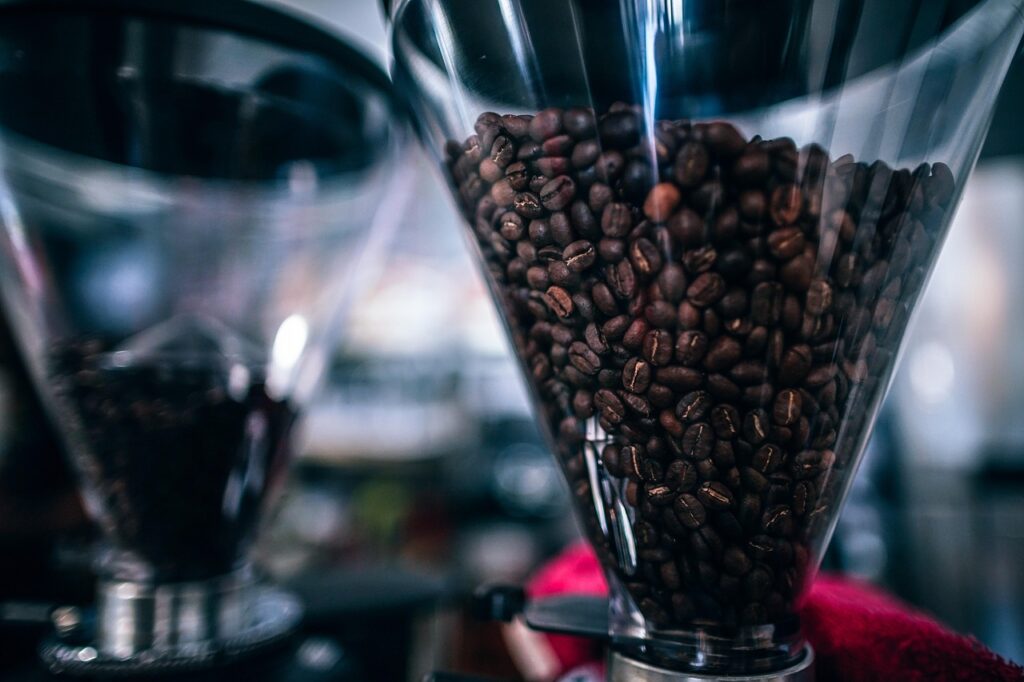
A super-automatic, also called a fully automatic or bean-to-cup machine, does every barista step for you. It grinds whole beans, doses them, tamps, brews and throws the puck into a drawer. Models with a milk system also froth the milk and pour it into your cup. You press a button; the machine does the rest.
What it doesn’t do is give you the control of a portafilter machine. The grinder has a limited range (a dozen or so steps is typical, and those steps are not as wide as a standalone grinder’s), the brew chamber is a fixed size, and you can’t really tweak the shot beyond strength, volume and temperature. If you dream of latte art and dialing in single-origin espresso, read my guide to the best espresso machines instead. Coffee shouldn’t be taken lightly, but there is nothing wrong with wanting it to be easy either.
Compared with a capsule machine, though, a super-automatic is a big step up: fresh beans for every cup, your own choice of coffee and no pile of pods. I have written about why I’m not a fan of capsule coffee makers, and a bean-to-cup machine fixes most of those complaints.
How to Choose: The 4 Things That Really Matter
- The milk system. This is the biggest decision. A manual steam wand or frother is cheaper and has fewer parts to clean, but you froth the milk yourself. An automatic carafe or milk unit makes a latte with one button, and you pay for that with daily rinsing. Black coffee only? Skip milk entirely.
- Cleaning effort. Look for a removable brew group you can rinse under the tap and a milk system with few parts. Machines that need a full disassembly every day end up unused.
- Brand, service and spare parts. In my opinion this matters more than the number of drinks on the menu. A super-automatic is a complex machine; when it needs a new seal or a repair, you want a brand with parts and service, not a long wait without coffee.
- Size and cup height. Measure your counter depth and check the spout height if you drink from tall latte glasses. Some compact machines only fit espresso and cappuccino cups.
Don’t count drinks too seriously, either. Many machines list hot water or frothed milk as a “drink”. And a cappuccino is basically a latte with more airy foam: in a blind test with a lid on the cup, very few people can tell them apart.
My Picks for Beginners
Philips 3200 Series with LatteGo: My Pick for Most People

Philips reminds me a bit of Apple in the Steve Jobs years: it often arrives late to a category, but after a lot of homework (here, the Saeco know-how it bought). The 3200 is the result. You get five one-touch coffees, including americano, cappuccino and latte macchiato, a ceramic grinder with adjustable settings, and the LatteGo milk system.
What I like most is LatteGo itself. It has two parts and no tubes, so you rinse it under the tap in about 15 seconds or put it in the dishwasher. That is the difference between a milk system you use and one you avoid. Treat the milk container with some care, as you would a glass carafe. It can be loud while grinding, and a few owners report grinder or leak problems, so keep your warranty papers.
Philips 2200 Series: The Simple Starter

The 2200 is the same idea with fewer buttons: espresso, coffee and hot water, adjustable strength and volume, and a classic steam frother for milk. You froth the milk yourself, which takes a little practice but works with dairy and plant-based milk alike.
A good pick for someone coming from pods who mostly wants fresh espresso and the occasional cappuccino. If the coffee tastes weak out of the box, use fresh beans and a finer grind, one change at a time. Want one-touch lattes? Spend a little more on the 3200.
De’Longhi Magnifica Evo with LatteCrema: Lattes and Iced Coffee
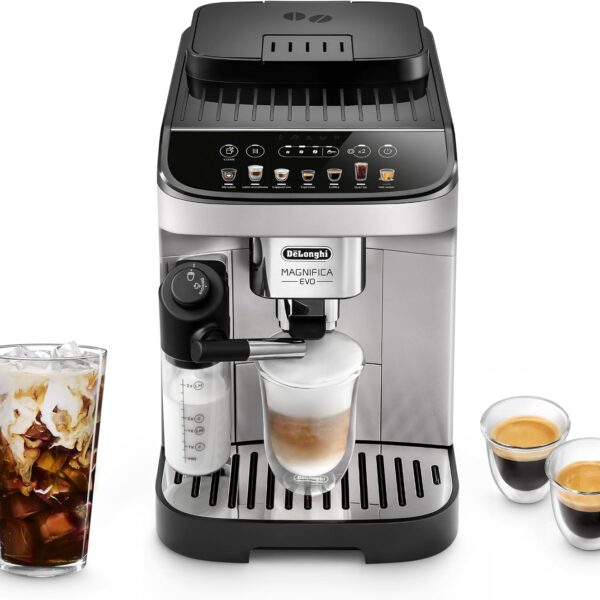
The Magnifica Evo gives you seven one-touch recipes, including a dedicated iced coffee setting that adjusts the brew so it doesn’t taste watered down over ice. The LatteCrema system froths dairy or plant milk hands-free, the milk unit goes in the dishwasher, and the conical burr grinder has 13 settings.
You can also save your own MyLatte recipe, which is nice when you have found your ratio. Two things to know: it is deep (about 19.5 inches), so measure your counter, and reliability feedback is mixed. Register it for the extra warranty year De’Longhi offers.
Gaggia Cadorna Prestige: For a House Full of Different Tastes
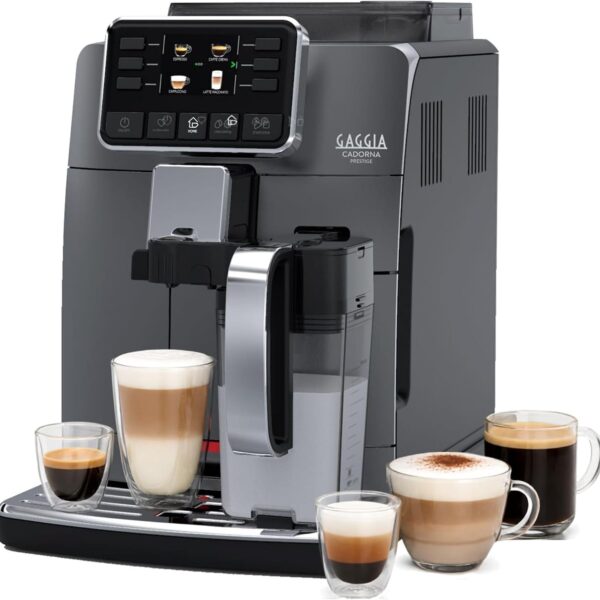
I have followed the whole Cadorna line, from the Style with a manual wand up to this Prestige, and the Prestige is the most complete. Fourteen drinks, including a real cortado and flat white setting, an integrated milk carafe that rinses itself after each milk drink, and four user profiles so everyone saves their own strength and volume.
It needs a regular cleaning and descaling habit, the body is mostly plastic for the money, and some owners report reliability issues. For a busy family or a small office, though, it removes a lot of morning arguments.
Jura E4: For Black Coffee Drinkers Only
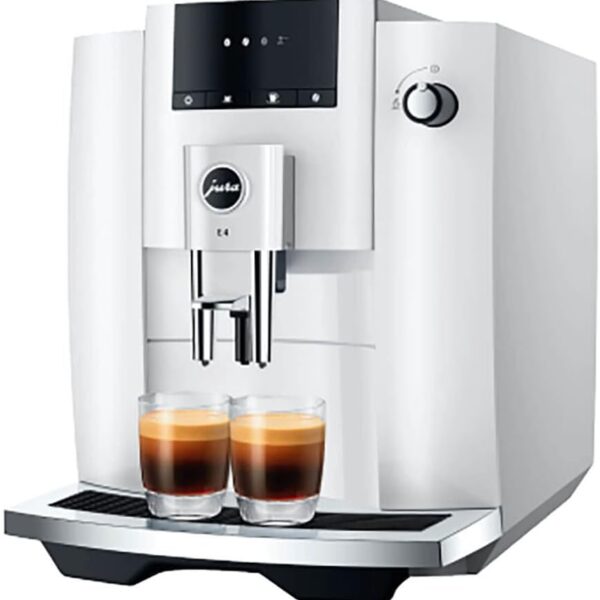
I drink my coffee without milk and sugar, so I have a soft spot for this one. The E4 has no milk system at all, and that is the point. It makes ristretto, espresso, coffee and two longer “Barista” coffees, using a conical burr grinder and Jura’s Pulse Extraction Process for a fuller shot.
Controls are simple, the design is compact, and there is a hot water function for tea. The trade-off is running cost: Jura’s own filters and cleaning tablets add up over the years. If you ever want a latte, you will need a separate frother.
Gaggia Brera: Small Kitchen, Italian Espresso

The Brera is one of the smallest super-automatics you can buy, and everything you touch daily (water tank, grounds drawer, drip tray) opens from the front, so you don’t need to pull it out from under the cabinets. The brew group comes out for rinsing, and the Pannarello wand is a forgiving way to learn milk frothing; it also gives hot water for an americano.
The downsides come with the size: a small water tank that needs frequent refills and limited cup height, so think espresso and cappuccino cups rather than tall latte glasses. A sensible, easy-to-live-with first machine.
The Cleaning Nobody Tells You About
Here is the honest part. A super-automatic saves you time when brewing, but it is not maintenance-free. Plan on this routine:
- Every day: empty the grounds drawer and drip tray, rinse the milk system after the last milk drink, and refill with fresh, filtered water. Water is around 99% of your cup, so it matters.
- Every week: take out the brew group (if your machine allows it) and rinse it under the tap. Let it air dry.
- Every few months: descale or change the water filter as the machine asks. With a filter like Philips AquaClean you can go much longer between descaling.
- Don’t use oily, very dark beans. They clog the grinder and brew group. Medium roasts work best.
One more tip: many machines heat their internals with a little water before the first shot, and if that rinse water goes into your cup, the coffee comes out lukewarm. Put an empty cup under the spout for the rinse, or run a hot water shot to warm the cup. Temperature complaints are very common with automatics and often disappear after this. For descaling and general cleaning, my coffee maker cleaning guide covers the details.
Who Should Buy Which
- You drink lattes and cappuccinos and hate cleaning: Philips 3200 LatteGo.
- You want a first machine and don’t mind frothing milk: Philips 2200 or, for a small kitchen, Gaggia Brera.
- You love iced coffee as much as hot lattes: De’Longhi Magnifica Evo.
- Everyone at home wants something different: Gaggia Cadorna Prestige.
- Espresso and black coffee only: Jura E4.
FAQ
Is a super-automatic espresso machine worth it for a beginner?
If you value time and consistency, yes. You get fresh-ground espresso drinks with no learning curve. If you enjoy the process and want to experiment, a manual or semi-automatic machine with a separate grinder will teach you more and give you more control.
Which beans work best?
A medium roast with chocolatey, low-acidity character, for example from Guatemala or Honduras, is a safe start, especially with milk. Avoid flavored and very oily beans. Taste is personal, so change one thing at a time (grind, strength, volume) until the cup tastes right to you.
My Verdict
A super-automatic is not the most romantic way to make coffee, but it is a very honest one: fresh beans, real espresso, one button. Choose by your milk habits first, then by how much cleaning you will really do, and buy a brand you can get serviced. For most beginners that means the Philips 3200 LatteGo; for black coffee purists, the Jura E4. Browse all of them below if you want to compare more models.
-
 Jura E4 Automatic Coffee Machine, Piano White
-
Gaggia Cadorna Prestige Super-Automatic Espresso Machine, Anthracite
-
Terra Kaffe Demi Compact Fully Automatic Espresso Machine, Cloud
-
De’Longhi Magnifica Evo Automatic Espresso Machine with LatteCrema Milk Frother
-
 Philips 1200 Series Fully Automatic Espresso Machine with Classic Milk Frother (EP1220)
-
 Philips 2200 Series Fully Automatic Espresso Machine w/ Milk Frother
-
 DeLonghi Dinamica Automatic Coffee & Espresso Machine
-
Miele CM 6360 MilkPerfection Fully Automatic Coffee & Espresso Machine
-
 De’Longhi Dinamica Automatic Coffee & Espresso Machine, White
-
Philips 3200 Series Fully Automatic Espresso Machine w/ LatteGo
-
Philips 3200 Series Espresso Machine with LatteGo and Iced Coffee (Renewed)
-
 Jura ENA 4 Automatic Coffee Machine, Full Nordic White